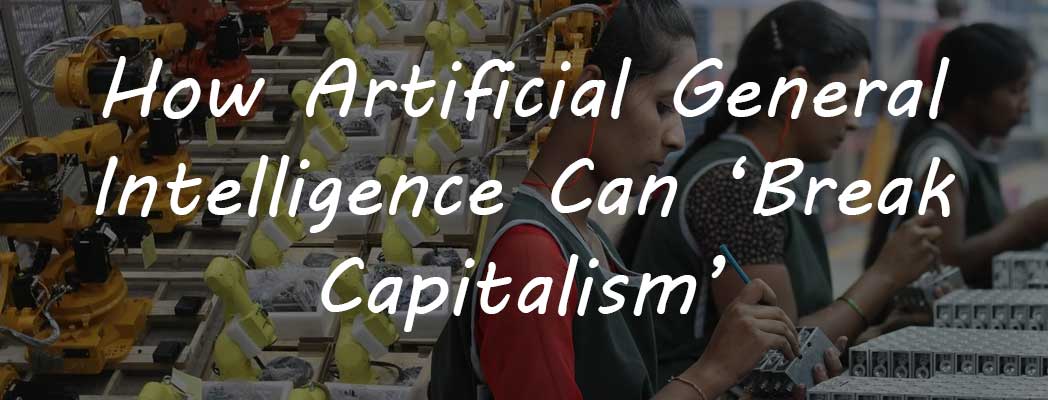
Artificial intelligence (AI) has the potential to change the world in ways we cannot yet fully comprehend. Some experts, including OpenAI CEO Sam Altman, believe that AI has the potential to break capitalism as we know it. In this technical blog post, we will explore the arguments behind this claim, the implications of this potential shift, and what it could mean for businesses and society as a whole.
What is Capitalism?
To fully understand the impact that AI could have on capitalism, it’s important to first define what capitalism is. Capitalism is an economic system in which private individuals or businesses own and operate the means of production and distribution of goods and services for profit. This system is based on the idea that individuals and businesses are free to pursue their own self-interest, and that competition in the marketplace will lead to innovation and growth.
What is AI?
Artificial intelligence refers to the ability of machines to learn and perform tasks that would normally require human intelligence. This includes things like image recognition, natural language processing, and decision making.
How AI Could Break Capitalism:
There are several ways that AI could potentially break capitalism as we know it. One of the main arguments is that AI could lead to the automation of many jobs, which would result in widespread unemployment and income inequality. This would be because, unlike in previous waves of automation, AI has the potential to replace even highly skilled workers, such as doctors and lawyers.
Another argument is that AI could lead to the concentration of wealth and power in the hands of a few large corporations. This is because AI requires large amounts of data to function effectively, and the companies that have access to this data will have a significant advantage over their competitors.
Additionally, AI has the potential to create new forms of value that are not captured by traditional economic measures. For example, the ability to analyze large amounts of data could lead to more efficient resource allocation and better decision making, but this value may not be reflected in GDP or other economic indicators.
Implications of an AI-driven Economy:
If AI does in fact break capitalism as we know it, it will have significant implications for businesses and society as a whole. For businesses, it will mean adapting to a new economic landscape where AI is a dominant force. This may require new business models, such as the use of AI as a service, and a shift towards more data-driven decision making.
For society as a whole, the implications are even greater. The widespread automation of jobs could lead to high levels of unemployment, which could in turn lead to social unrest and political instability. The concentration of wealth and power in the hands of a few large corporations could also have negative consequences for democracy and social equality.
Conclusion:
In conclusion, the claim that AI will break capitalism is a provocative one that deserves serious consideration. While there is no doubt that AI has the potential to be a disruptive force in our economy, it is up to us to decide how we want to harness this technology. We must take proactive steps to ensure that AI is used in ways that benefit society as a whole, rather than just a select few. This will require a deep understanding of the potential implications of AI, as well as a commitment to building an economy that is inclusive, sustainable, and resilient in the face of technological change. Reference from a recent interview of Sam Altman, the CEO of OpenAI and creator of ChatGPT with Forbes.
